Skulptur Projekte Münster, the decennial exhibition of public sculpture staged in the eponymous German city, was founded in 1977 as a response to popular outrage. The late American artist George Rickey, whose quietly mesmerizing kinetic sculptures for outdoor space are now well known, scandalized a portion of the city’s residents with his installation in the middle of a grassy expanse on the city’s historic promenade. Three Squares Gyratory II (1973-75) was, for the time, a radically simple composition, comprising three brushed stainless steel squares slowly rotating in response to subtle changes in the atmosphere. It was presented at a time when such non-objective, apparently rudimentary artworks still had the capacity to provoke ire in their viewers, particularly when staged in a rather provincial German town like Münster. Detractors of the work sent angry letters to the local press; city council meetings were held to discuss its removal; a few residents even sent in proposals of their own to replace Rickey’s sculpture with something presumably more palatable. All of this prompted the art historian Klaus Bussmann, then curator of Münster’s Westphalian State Museum of Art and Cultural History, to conceive of a festival, organized by the city and in conversation via public forums with its residents, to commission cutting-edge public sculpture by the world’s leading contemporary artists. Prior to Rickey’s scandal, many of the municipal decisions regarding public art were made without the public’s input. In a smaller city like Münster, a more equitable approach seemed not only possible but worthwhile. The first edition was co-organized by a young Kasper König, who until then had been a studio assistant to Claes Oldenburg and a professor at the Nova Scotia College of Art and Design. It included new site-specific sculptures by Oldenburg, Michael Asher, Richard Long, and Donald Judd, among other titans of the era.

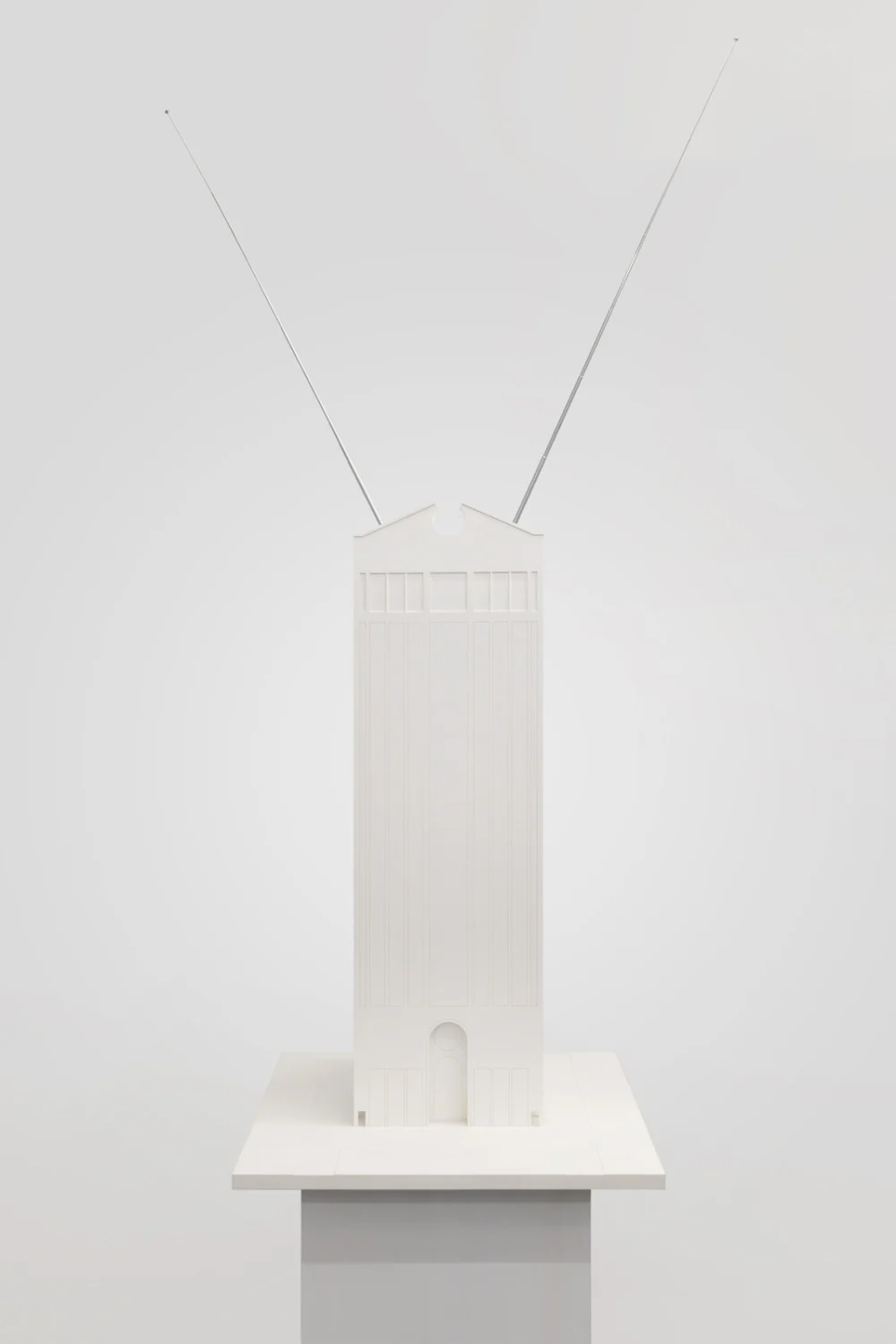
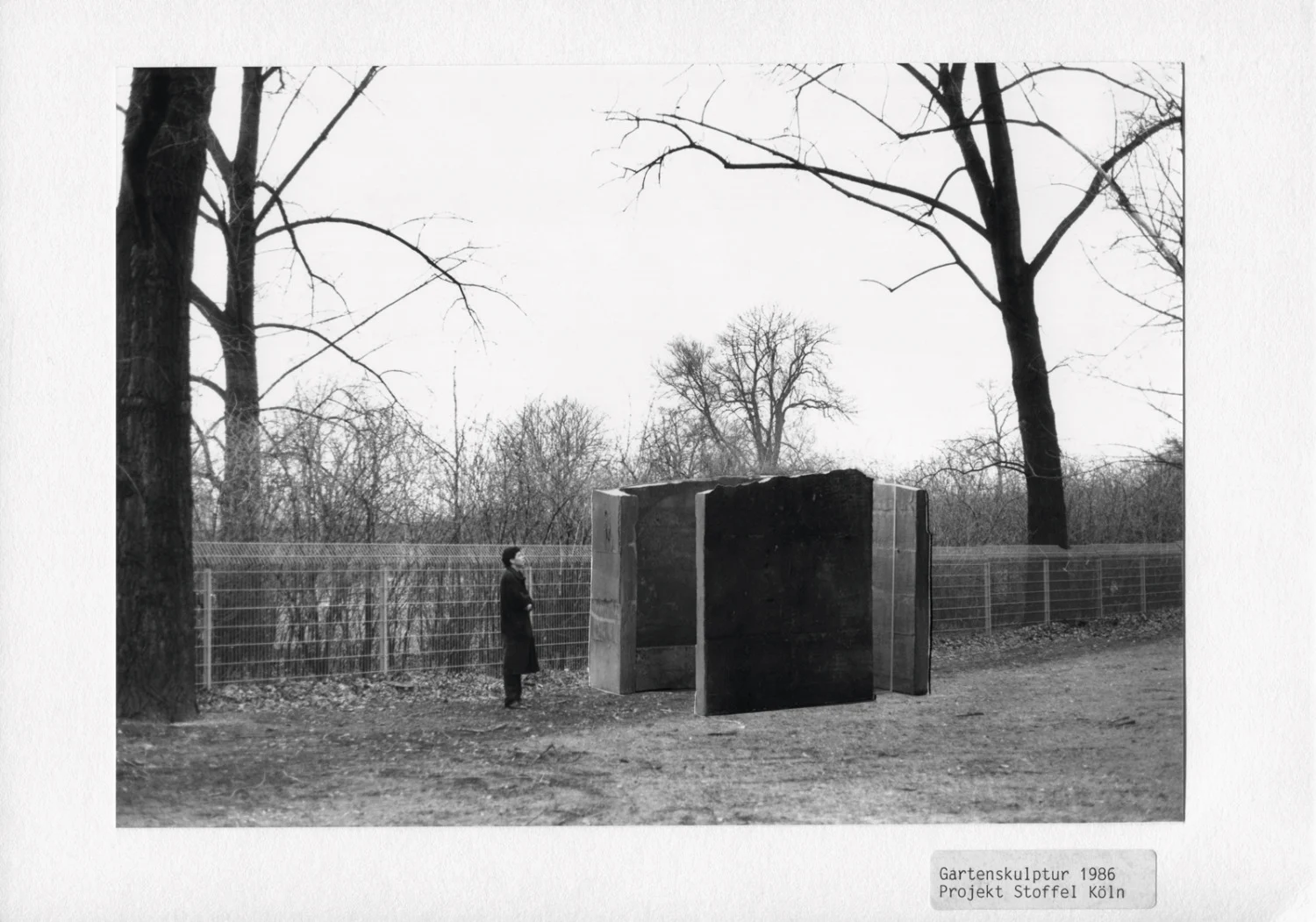
Over the next four decades, the German artist Isa Genzken would contribute four artworks (one unrealized) to the festival, each time showcasing her astonishingly diverse range as an artist. The proposals for these projects (scale model maquettes, preparatory sketches, collages, photographs, and various bits of exhibition ephemera), alongside other proposals for public sculpture throughout her fifty-five-year career, formed the basis for the inaugural show at Galerie Buchholz’s new three-story gallery across the street from MoMA. Many of these public projects, including the artist’s proposal for the 2017 iteration of Skulptur Projekte, existed solely as maquettes; many of the maquettes themselves were made retroactively, in 2015, perhaps as an attempt to round out the archive of Genzken’s activity in the public sphere. Seen together in a gallery, they are perfect little sculptures. The artist’s natural aptitude for the changes of scale and the site-responsiveness inherent to large-scale public artwork, the characteristic dynamism and verve of her process, is everywhere evident in these delicately crafted models. The projects themselves make George Rickey’s controversial project seem tame by comparison. Her proposal for the former AT&T building at 550 Madison Avenue, for example, was to simply adorn the building with giant radio antennae. As one slowly moved through this dense exhibition, it became increasingly evident that Buchholz, Genzken’s dealer and collaborator since 1987 (the year Genzken first participated in Skulptur Projekte), was an ideal candidate for curating this relatively underexhibited facet of her oeuvre. On the walls, bracketing the show’s twenty-odd maquettes, were paintings from Genzken’s More Light Research series, graph-paper sketches, hand-doctored photographs and postcards which offered insight into Genzken’s scrupulous approach to these seemingly immediate and intuitive ideas– bits and pieces of this artist’s career that only someone who has worked with an artist for 40 years would have access to. A handful of stand-alone sculptures, one of which happened to also be a model for a larger public project, muddied the lines between what counted as a discrete artwork and what was used as fodder for something bigger. The model for Gartenskulptur (1986), for example, looks uncannily like the artist’s famous concrete-and-steel structures, mounted as it is on the same spindly, welded steel plinth, but the actual sculpture (as shown in a nearby collage) was intended to sit directly on the grass. This kind of relational, almost diagrammatic move is employed everywhere in the show. Photographs of the artist by her old friend Wolfgang Tillmans, vitrines full of rarely-seen drawings and collages, and merchandise from institutions where these projects were staged (a T-shirt from MoMA with her iconic Rose silkscreened on the front, for example, was placed not far from a Tillmans photograph of the artist and a rose), commingled into a whole that felt charged with a kind of essential Genzken-ness. This essence was conveyed through what gradually unfolded as the exhibition’s dense web of connections, the depth and complexity of which were available to any viewer curious enough to dig deeper. The various maquettes were arranged on plinths like perfect Lilliputian cities; one slowly waded among them like Godzilla. Amongst them were countless ways to appreciate them, to understand them, and to connect them to each other.
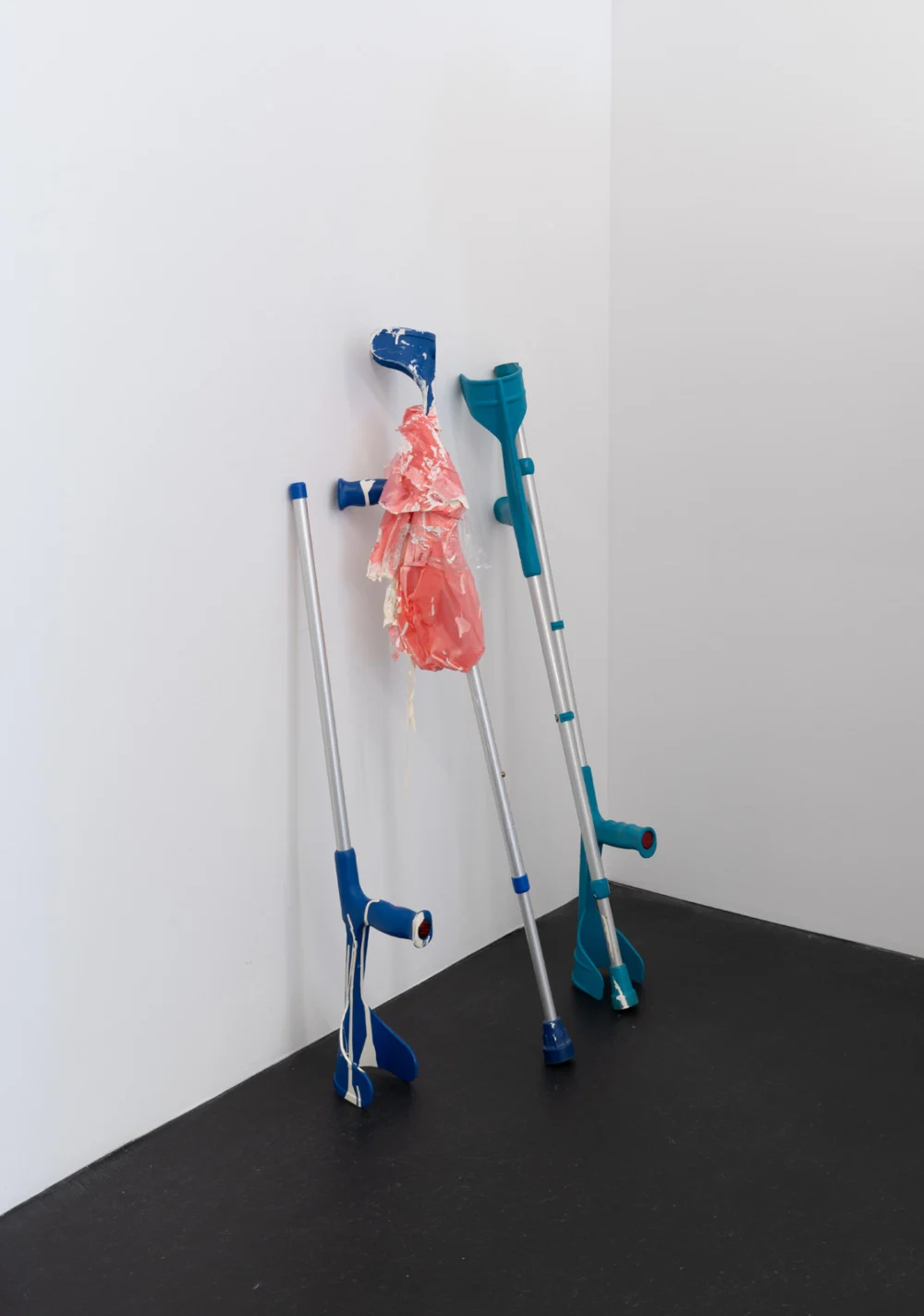
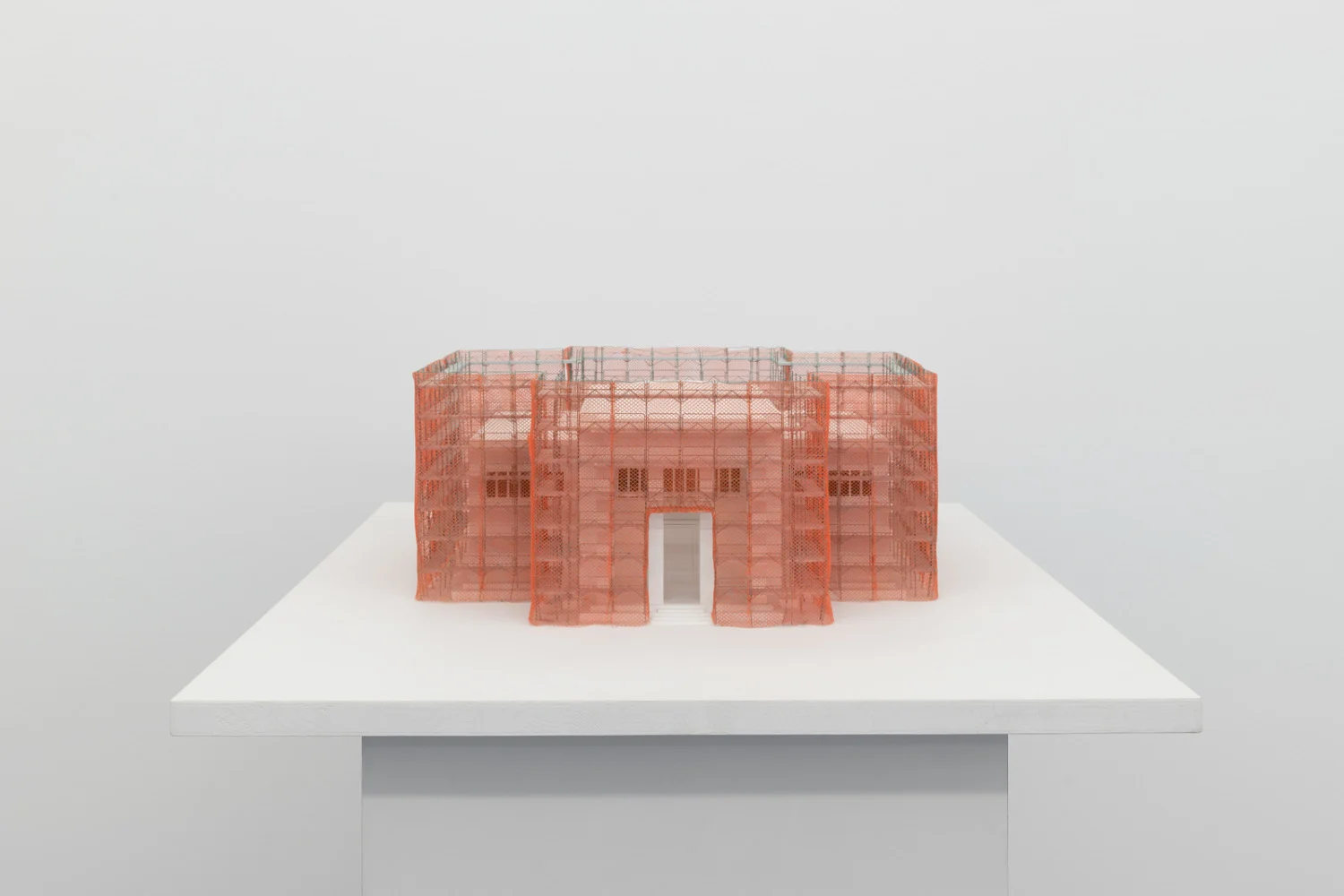
Genzken’s humor and openness to what art is or can be, alongside the wealth of material available to Buchholz, gave the show an ineffable charm. Always the collaborator (and provocateur), the artist’s radical vision appeared surprisingly condensable in this format. If an artist’s practice can only ever be accessed piecemeal, subjected as it is to the abbreviations that any exhibition demands (even a retrospective, like Genzken’s at MoMA in 2014), this show was a rebuttal to that sad ontological problem. One became a resident of her world, totally absorbed in its frenetic logic. To be able to confront the curt, readymade simplicity of 2007’s OIL, which imagined the German Pavilion of the Venice Biennale as a building under construction, replete with scaffolds and orange netting, alongside something like Untitled (Macy’s Parade) from 2017, which brought a Sonic the Hedgehog balloon to the quaint old-world town of Münster and reads like a stoner’s half-baked idea of what contemporary art is, is a rare kind of engagement with an artist’s oeuvre. When such projects are exhibited tangentially to sculptures like 2006’s Untitled, which consists of a couple of crutches splattered with paint, or the dyed-concrete bench (the park bench is public sculpture par excellence) by Kai Althoff that was commissioned for the exhibition, the way this artist thinks, her mind for materials and quick, often silly ideas, is allowed ample room to perform its alchemical magic. Discrete genres (sculpture, drawing, social practice, model-making) dissolve and become the clay with which Genzken forms her art.
Experienced together, the disparate threads of the exhibition cohered to stunning effect. Stunning, for one, because all of it was ultimately intended for the everyman. One imagines what it must have been like to see these things in their original locales. Genzken’s practice is often inscrutable, unwieldy, and resistant to language. These are qualities that art historians, curators, and other artists desire greatly; the public, not so much. As George Rickey’s example indicates (and Bussmann and König’s ambitions for public art reinforce), artworks made for "the people" are also often a challenge to them. An exhibition of them, even more challenging. A practice as irreverent and frequently inexplicable as Genzken’s is difficult for any audience or curator, let alone the uninitiated passerby. The triumph of the Buchholz show is one of translation: how to distill a kaleidoscopic vision down to the scale of a commercial gallery without compromising any of its complexity, particularly when that complexity has been trained toward something as fraught as art made for the public.
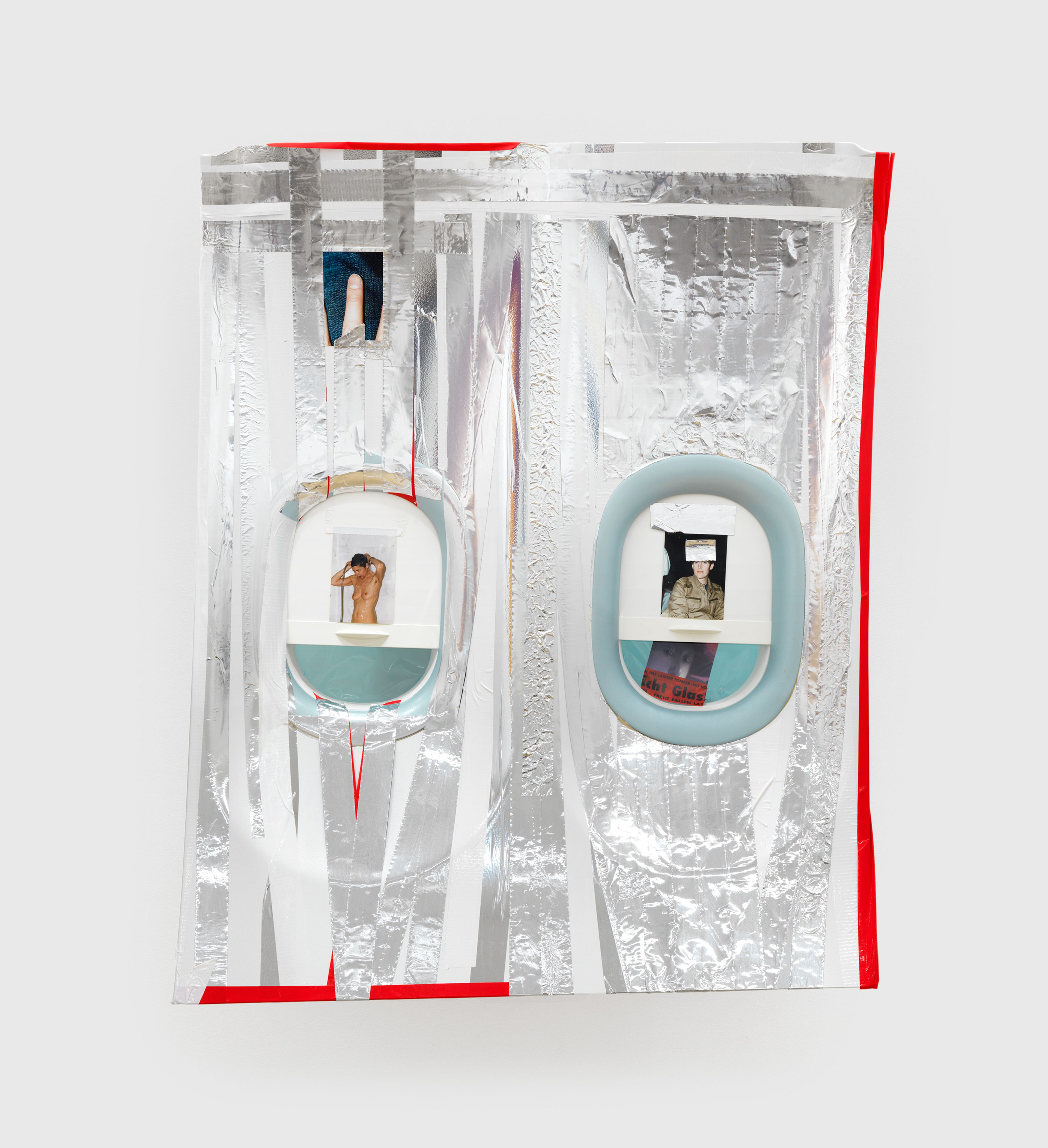
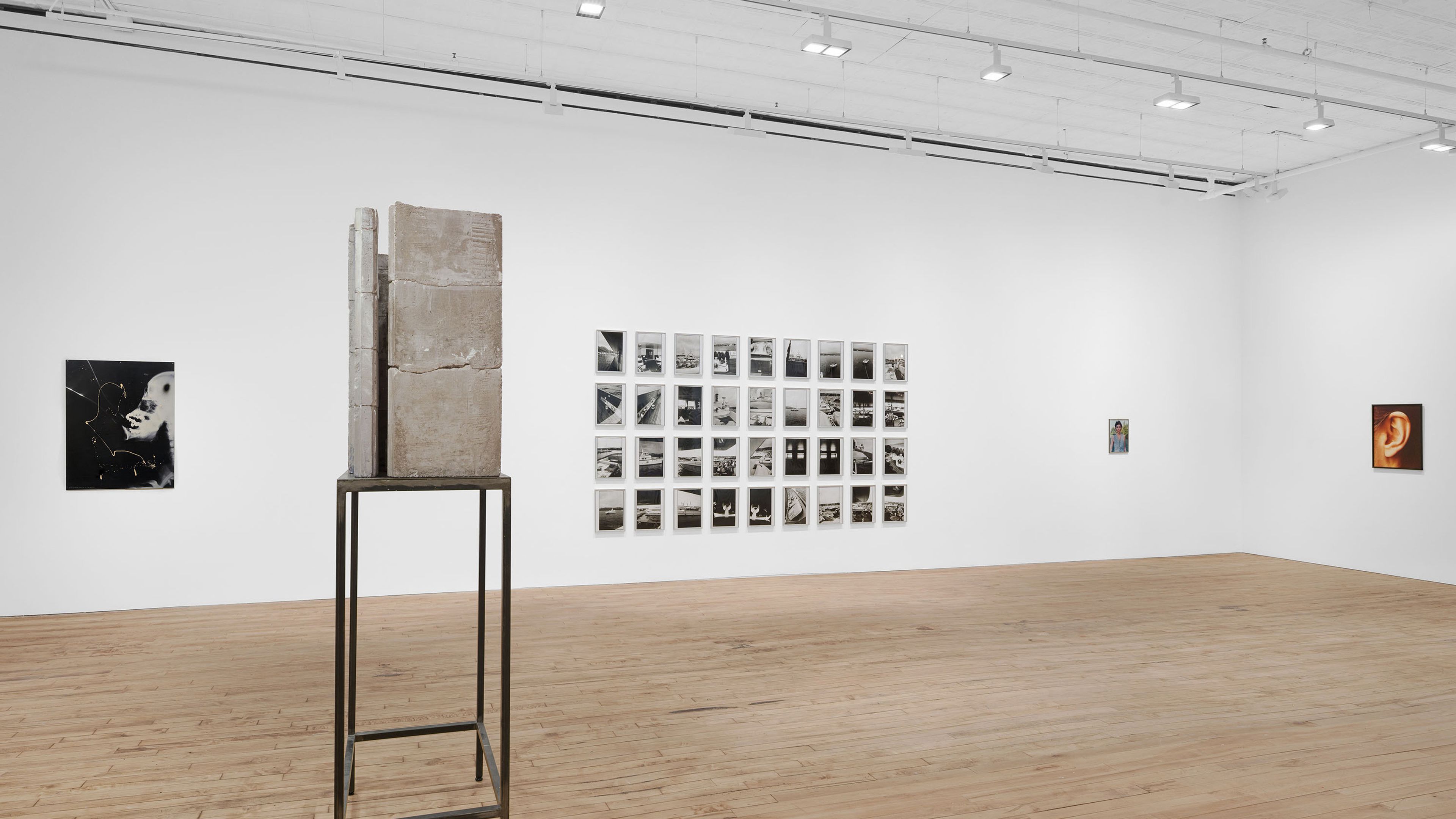
Another Isa Genzken show was on view at the same time as the Buchholz show, downtown at David Zwirner’s Tribeca space (previously known as 52 Walker). Though never made explicit, the two shows were conceived as two halves of a single retrospective spread across the city. While Buchholz handled Genzken’s "projects for outside,” Zwirner dealt with a smaller array of citations from the artist’s various phases and modes (paintings, photographs, and sculptures), gathered loosely under the notion of a “vacation” from the art world. This thesis was, ostensibly, meant to be explored through the various references Genzken makes in her work to transportation (airplane windows, the sound of jet engines, photographs of an art collector’s yacht), and perhaps further driven home by the open-ended nature of the installation: things are placed seemingly at random, evoking a feeling of transience, fluidity, or the kind of aloofness one experiences while on holiday. Despite their intentions, and unlike the Buchholz show, Zwirner’s approach offered relatively little to ground Genzken’s work discursively as part of something larger, and instead pivoted on an idea that is already vague in itself. Perhaps Genzken is right, maybe the art world does need a vacation. I don’t believe that vacation should be from coherence or clarity. Walking into the Zwirner exhibition after seeing the show uptown felt like stepping into a warehouse where art just happened to be sitting. When given the opportunity, at Buchholz for example, to see how the artist used her iconic image of a human ear to anthropomorphize the town hall in Innsbruck, as though the building itself could listen to its surroundings (Ohr (Ear), 2002), or to see that it was used, years later, as the cover of Berlin-based electronic musician Efdemin’s record Poly (2025), the work felt robbed of its efficacy when sat alone on a wall. It’s not that it can’t spark all kinds of musing when seen by itself; it’s that by comparison, divorced from its greater context, the work appears dulled. What does a Tillmans photograph of the artist (Isa Genzken, 1993) offer when there’s no rose in a vase calling back to her famous Rose sculpture, the same one that sat in MoMA’s sculpture garden for years? Even the "World Receiver" sculptures—clumsily built concrete casts with radio antenna sticking out—which featured prominently in the Zwirner show, lose some of their power when there isn’t a real Cold-War-era Weltempfänger there to drive the point home (this readymade was the first in Genzken’s series and sat, like a welcome mat, in Buchholz’s first floor window).
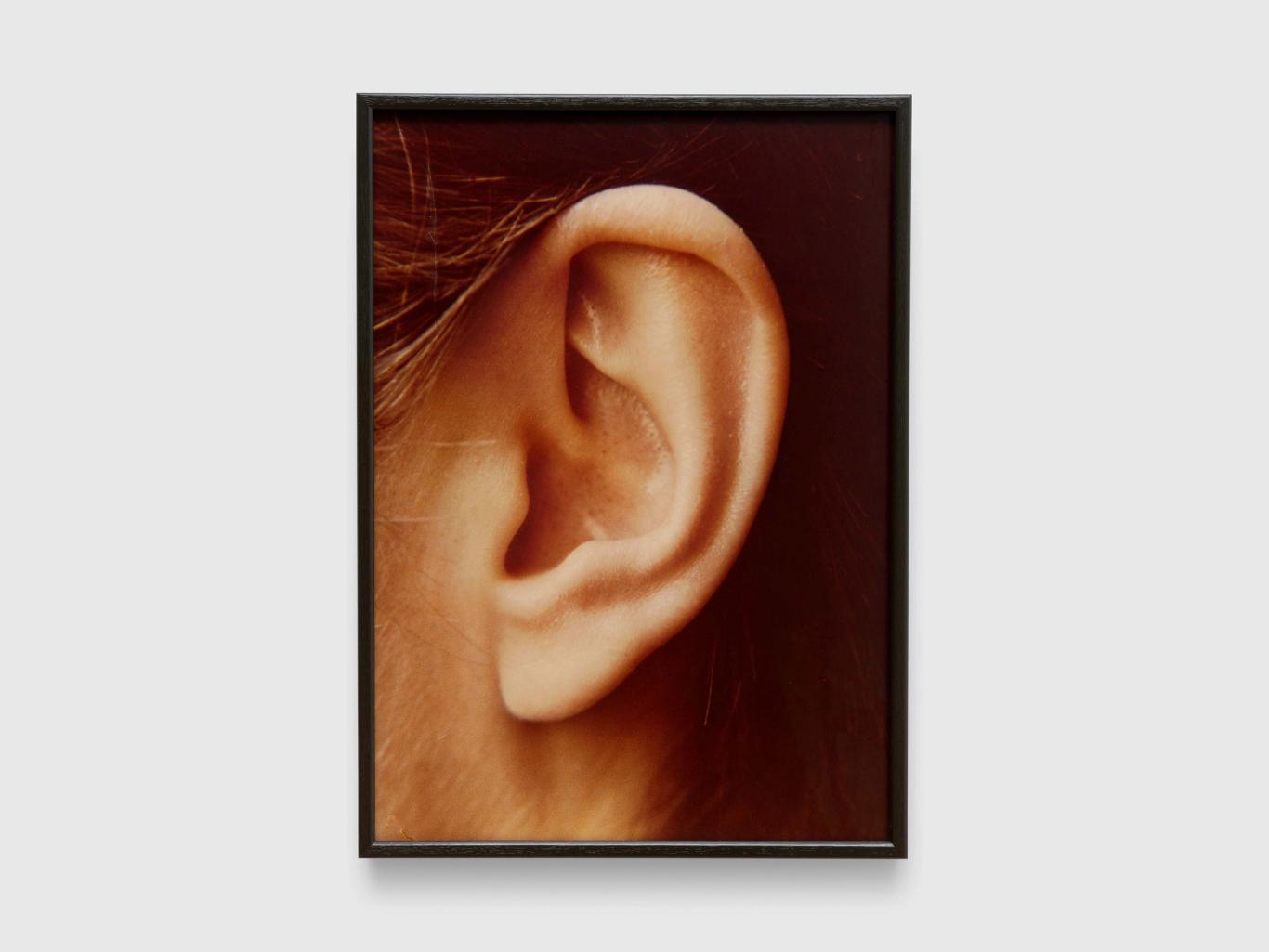
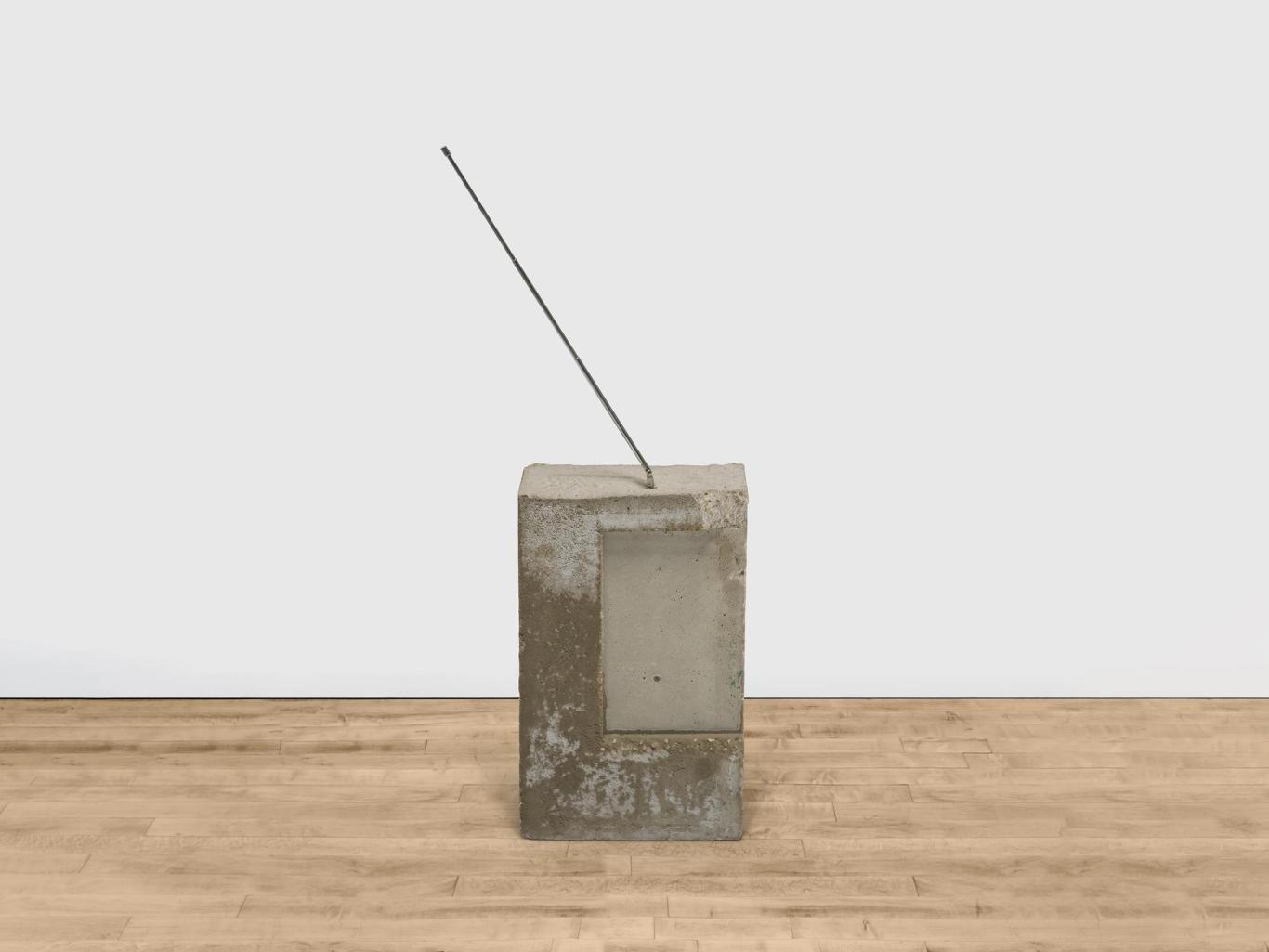
The problem isn’t that art needs a brochure to be experienced properly— in fact the opposite is almost invariably true— but that exhibition-making is a craft whose subtleties speak loudest, and context is often the invisible glue that holds a great show together. Perhaps, too, it’s unfair to compare a show whose entire conceit (proposals for public sculpture) has a greater context (public space) embedded into it. Public art is inevitably discursive by virtue of its position in social, and therefore political, space. The question is, what does a late-career, two-venue exhibition do to expand the public’s conception of an already revered cultural figure, when one half of it does so little of the expanding by comparison? Both galleries are behemoth, generation-defining sites; both have advanced and/or stewarded the careers of some of the last century-and-a-half’s most important artists; both are German. Perhaps Zwirner has wandered a bit too far from home? Or perhaps being an empire can only be achieved at the expense of consistency and rigor. My hope is that the divisiveness of these two shows, the friction generated by their apparently opposed logics (and the glaring disparities in their execution) will prompt other gallerists, artists, or exhibition-makers to consider what the public needs (or doesn’t). Ideally, it will have taught us how to make better shows—even more optimistically, it may remind us that public art is still an open field for experimentation, that art can do more than what we think it does in a gallery. It may remind us that what happens outside of art is just as important as what happens inside.
Images reproduced for purposes of criticism and review. Credits and sources as listed in captions.