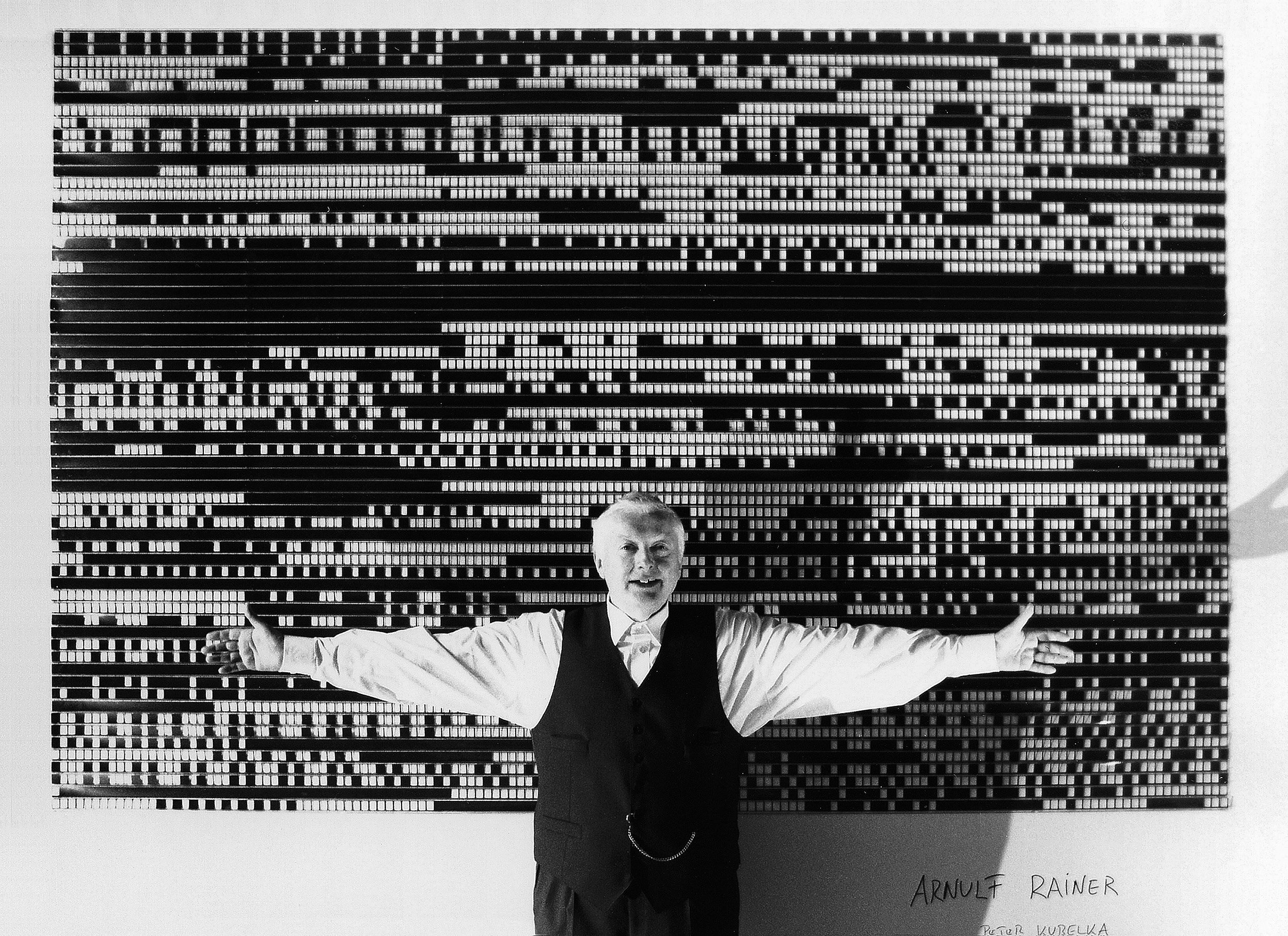
There are no available academic studies about how many images a modern subject consumes in one day. Marketing statistic aggregation sites generally cite the average time spent on apps like TikTok and Instagram Reels at around 50 minutes. Given an average watch time of three seconds, that’s about 1000 images every day. Because the applications prioritize speed and smooth interfacing in their viewing experience, these images approach the subject at a high velocity.
And yet there’s something relaxing about having your desire unconsciously affected. You let the muscles in your brain relax, loosen the tension in your shoulders, and spin the image slot machine; there is no pretense, no preparation, no thought to obfuscate the pleasure. The gears of critical thought shudder to a halt and a kaleidoscopic cavalcade of images appear before you: a populous sea, a woman devouring glossy candy-shelled fruits, multitudes of Americas, an unlikely friendship between dog and pig, clusters of grapes, snow, tobacco, veins of metal, water vapor, simulated oral-sex, pop-stars caught leaving hazy clubs, soccer goals, cruel pranks, drugs, torture, soft-core. In this process of spinning the wheel, thought becomes a remainder.
The effect is numbing; it’s Baudrillard’s definition of ecstasy: “the transition to a pure state, in its purest form, of a form without content or passion … the antinomy of passion.” In Jorge Luis Borges’s short story The Aleph, the narrator peers into a rip in reality—the “Aleph”—in which all things in the universe can be looked upon in an instant. Looking into this peephole, the narrator is overcome by an ecstatic reaction, simultaneously of sheer awe and terror, and complete indifference: “I felt dizzy, and I wept… the indifference in my voice surprised me.” The Aleph in The Aleph can be described as an ocular lens that opens up to an ecstatic image of the world and its representation. Today, the mobile phone and algorithmic video content have come to function in the same way. I contend that this form of media has an unlikely predecessor in the history of experimental cinema in which the synchronicity of two events suggest the fact that high-speed video content could affect behavior, and foresaw its prevalence in late-modernity: the 1957 confluence of the films of Peter Kubelka and the marketing research of James Vicary. My intention is not to sketch a line of direct influence, but instead to draw a parallel between how high-speed images were used in the history of images in the 20th century and their descendants of late-modernity, joined not by direct influence but by an Après-coup in which the synchronicity of Kubelka and Vicary becomes legible through the light of what came after.
The Austrian filmmaker Peter Kubelka’s early films were the result of a series of spectacularly failed commissions. When asked to create a commercial for Café Adebar, a dance bar in Vienna, Kubelka produced Adebar (1957), a two-and-a-half-minute montage of alternating black and white silhouetted dancers set to a grating loop of “Pygmy music” and arranged using mathematical formulas. Café Adebar rejected the advertisement outright. Subsequently, a commission from the beer company Schwechater Bier led to the creation of 1958’s Schwechater, a one-and-a-half-minute ad in which a series of heavily contrasted images appear in strobic flickers; white silhouettes and flashes of red shimmer against the film strip’s inky black. A series of images is repeated several times with increasing speed: the face of a woman vectorized in high-contrast, a group of people dining, a hand reaching down and grabbing a beer, and a woman drinking it.
In both Adebar and Schwechater, flickering frames of pure red slowly increase in frequency as the films progress, creating an optical illusion in which the black and white images appear to take on a red hue. In the digitally scanned versions of these films available online, chromatic aberrations and glitches in the scanning process caused by the strobing imagery produce chromatic streaking which borders the vampiric silhouettes across flashing imagery of beer-drinkers and party-goers producing a sense of dark-psychedelia in which the psycho-somatic effect of the films seeps even into the eye of the digital scanner. Schwechater Bier rejected the advertisement, destroyed their copy of the film, and sued Kubelka, chasing him out of Austria (they later had to request a new copy when the film became an avant-garde hit).
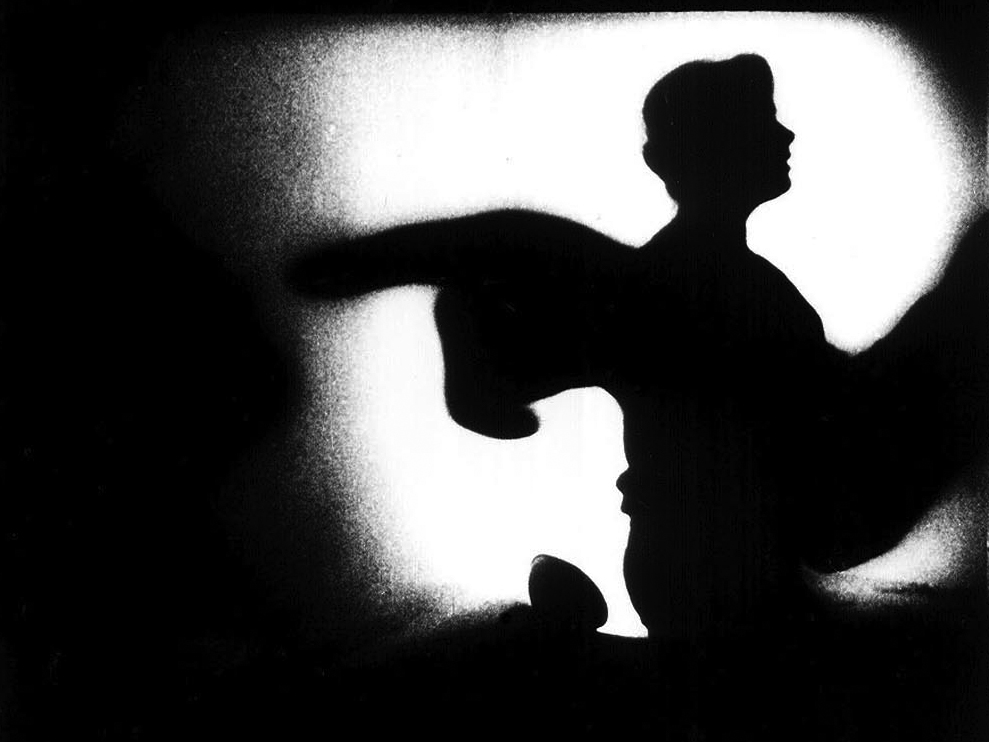
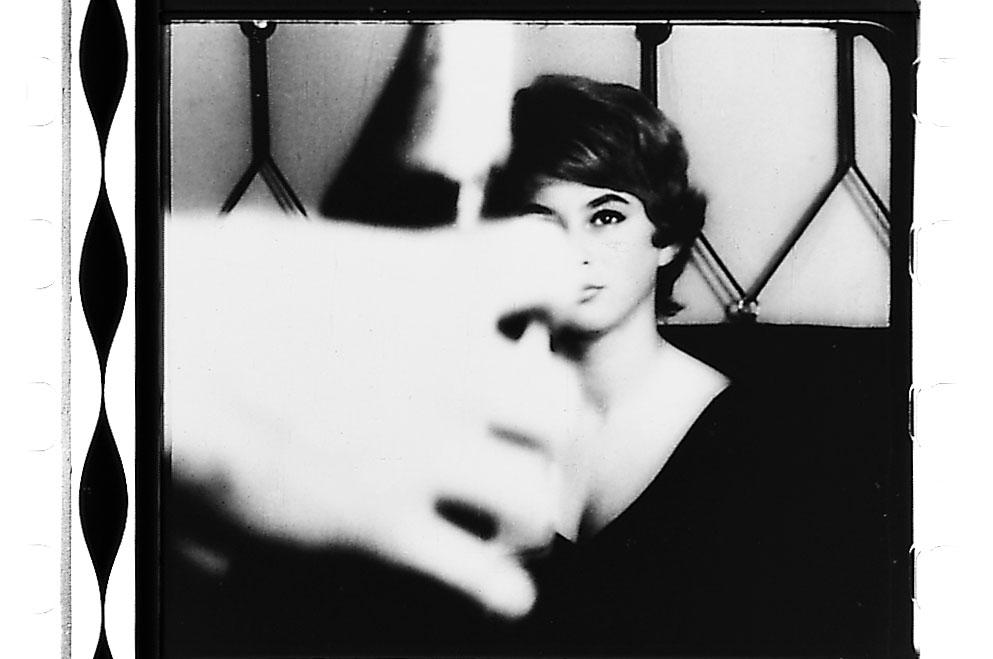
Following this, Kubelka moved to Germany and was commissioned to create a portrait of the painter Arnulf Rainer. He made Arnulf Rainer (1960), a film consisting solely of strobing black and white frames. This film is considered the ur-text of structural film and the first “flicker film.” In Kubelka’s films, increasing to fever pitch in Arnulf Rainer, content as such disappears. Instead the effect of the film, which appears to be replete with strange shapes and iridescent colors, is produced entirely within the bio-optical system of the viewer.
The media theorist Marshall McLuhan separated media into “cool” media and “hot” media. Whereas a “hot” medium is defined by an excess of information that allows the viewer to consume the image passively, the “cool” medium provides little or low-quality information, thus compelling the viewer to actively complete the image in their head. Mcluhan considered film a “hot” medium because it delivers a large quantity of high-definition information to the viewer and requires little active input to consume. In Mcluhan’s terms, Kubelka’s flicker film is anti-cinematic, a “cool” medium,” in that it gives the viewer the extreme low-end of visual information: a binary sequence. It's in the dialectic between the specific temporality of this sequence and the way that human perception receives its fractured information that the content of the film is produced. The image the viewer sees, including the phantom shapes, afterimages, and hallucinated colors is manufactured retinally, by the brain’s effort to fill in withheld information—it is well documented that in circumstances of intense sensory deprivation the brain generates its own sensory experiences.
In 1957, the year before Kubelka's Schwechater was delivered, market researcher James Vicary held a press conference to release the results of a study testing the effectiveness of subliminal images on New Jersey moviegoers. Vicary had inserted frames of text urging the audience to purchase popcorn and Coca-Cola. Vicary overlaid the frames—reading ”eat popcorn” and “drink Coca-Cola”—onto the film using a high-speed projection machine called a Tachistoscope, a precursor to computers often used in psychological experiments due to the high-speed at which it could cycle through images. The messages were flashed on the screen for 1/3000th of a second every 5 seconds. At the press conference Vicary relayed stunning results, the experiment had led to a huge increase in sales for both popcorn and Coca-Cola following the screening, 57.7% and 18.1% respectively.
These results caused a public panic about invisible marketing and the unconscious control of popular desire, a frightening prospect when the spectre of the Second World War and the mass fascism of Nazi Germany loomed large in the recent past. The CIA’s MKULTRA project—a project involved in such tasks as researching chemical and psychological methods of controlling and altering human behavior—had started in 1953 and was in full swing by the time Vicary’s report came out. A CIA report written on Vicary’s experiment linked it to another history of internal experimentation and the possibility of transforming desire, psychoanalysis: “The masked stimulus arouses some aspect of this ubiquitous sex drive, a drive which can hardly be directly satiated in polite society and one of which the conscious recognition is more or less anxiety-producing. The vague discomfort the individual feels as a result of subconscious stimulation must be allayed by some associated gratification, and this gratification—the advertiser hopes—is the socially acceptable acquisition of the product which he is trying to promote.”
Although Kubelka had no direct connection to Vicary and his so-called “invisible advertising,” several similarities can be seen between the work of the artist and the market researcher. Both projects utilize mathematical formulas to determine precise durations and frame counts towards a kind of psycho-optical combination of several heterogeneous images that bleed into and stain each other—Kubelka’s red frames hue the monochrome frames in Adebar and Schwechater, and Vicary’s “masked stimulus” of signifiers stain a moving image product meant to capture audience attention at length. Viceroy’s contemporaries and successors continued to pursue his project of subliminal behavioral manipulation. Most notably, Hal C. Becker and his company The Precon Process and Equipment, which attempted to commercialize subliminal advertising by patenting the tachistoscope projector necessary to flash projected film at subliminal speeds. Only one year after Vicary’s popcorn experiment, Becker’s company inserted subliminal frames of meant to “increase the thriller effect” into the 1958 Harold Daniels film My World Dies Screaming, including a devil face, a skull, a cobra, and the message “Scream Bloody Murder,” causing public panic and getting the technique banned in the UK.
Seen in this light, Vicary’s subliminal film experiment can be seen as a kind of structural film. Although Kubelka’s films were not designed with the same kind of mass subterfuge that Vicary embraced, their status as advertisements prior to their reevaluation as experimental film points to Kubelka’s close attention to how moving images affect desire; Kubelka considered how a cyclically repeating image of a high-contrast hand grasping a cold beer, shown in “flickers,” could incite desire in a viewer. Kubelka wrote, embodying Vicary’s archetype: “my intention when making films is not a wish to entertain, but rather that of a scientist who does his research.” Schwechater Bier did not share his vision.
Additionally, Kubelka and Vicary were, in very different ways, working within the archetypical framework of the fraud, the swindler, or the con man. Infamously, the findings that Vicary himself revealed that his findings were faked and that the experiment was concocted as a gimmick to attract customers to his failing marketing business. It’s likely that Vicary didn’t conduct his famous experiment at all. He was simply smart enough to grasp an opportunity at a moment in which the fear of unconscious control and the loss of free will open a space for the suggestion of an idea: the media we consume, consumes us.
For his part, Kubelka latched on to a series of commissions as opportunities to produce films using highly idiosyncratic ideals about filmmaking as an art form, fooling his clients into believing he was a quotidian advertiser to take their time and capital. During the filming of Schwechater, Kubelka famously exhausted his film supply well before the shoot finished and faked the rest of the shoot, performing his role of director with a camera void of film.
This is not an indictment of Vicary or Kubelka. Both of these filmmakers (I find it interesting to see Vicary as a filmmaker, although he likely never touched a camera in a professional capacity) are reacting to overlapping vectors of technological developments and epistemic shifts that opened up a situation in which duplicity paved a road for radical new ways of thinking about images. Desire-creation in images, in this sense, is about what is barely perceived and forgotten, and what is absorbed and sublimated into the optic-neuro system of the viewing individual, and what suggestions can be snuck in through the front door. Looking back at these histories from the vantage point of today’s media environment, with its debates about “fake news” and neutrality, it should come as no surprise that duplicity was integral to the development of its predecessors.
Speaking about his film Arnulf Rainer in the 2012 documentary Fragments of Kubelka, Kubelka states: “The structure of my film is metric. It’s sixteen even parts. The elements are only the four basic elements of cinema: sound, silence, light, darkness. All the elements have the same length, namely a twenty-fourth of a second. And out of that simplest film language, I built then my ecstasy.” I began this essay with a reflection on short form media content as a kind of “ecstatic image” in which a deluge of content sweeps the viewer into a paradoxical nothingness, a non-time. Kubelka and Vicary can be seen retroactively as two inventors whose products provided the ur-text for the development and exploitations of these systems.
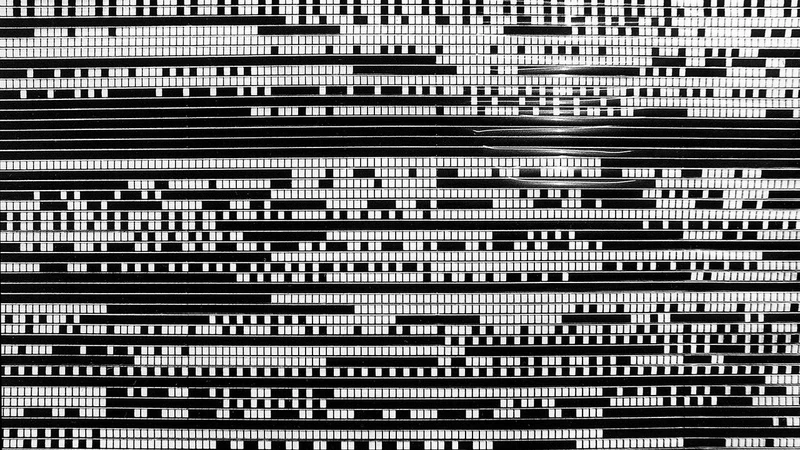
In a Baudrillardian sense, in the ecstatic image an excess of content is functionally similar to its dearth. Although we might see a film such as Arnulf Rainer and its effects as being a result of its radical lack of information and the effect of algorithmic video content as the result of a radical excess of information, their effects approach a similar zero-point from the opposite poles of minimal sensory content at high speed and overstimulation through excess. Their difference lies in the apparent paradox, that Baudrillard and McLuhan saw so clearly, that Arnulf Rainer contains more content in its deprivation than the deluge of images we consume on TikTok or Instagram Reels, the overstimulating non-time of the ecstatic image. Arnulf Rainer overstimulates in its lack of information, whilst the ecstatic image produces temporal and mnemonic absence in its excess. Baudrillard: “Ecstasy is all functions abolished into one dimension, the dimension of communication. All events, all spaces, all memories are abolished in the sole dimension of information: this is obscene.”
The critic Parker Tyler wrote that Arnulf Rainer’s “chemical aesthetics” constituted a “new experience of psychedelic time,” and lamented that “a human subject may find the greatest ‘aesthetic’ reward in the simplest repetitive movement of some object or objects.” Tyler’s criticism was written in fear of the disappearance of a complex subject of cinema. We can’t help but feel that Tyler’s nightmares have come true. We live in the age of Vicary’s dreams and of Kubelka’s hallucinations.
Images reproduced for purposes of criticism and review. Credits and sources as listed in captions.